

Sometimes, yes. A cavity caught at its earliest stage, while the damage is still limited to weakened enamel, can often be stopped and rebuilt with cavity reversal instead of a drill and filling.
Whether your tooth qualifies is something our Jacksonville, FL dentist can tell you after an exam and X-rays.
Here’s what you need to know about reversing a cavity.
What “Reversing” a Cavity Really Means
Tooth decay starts when bacteria turn sugars and starches into acid, and that acid pulls minerals out of your enamel. Early on, the only sign may be a chalky white spot on the tooth.
Federal dental researchers note that decay can be stopped or reversed at that white-spot stage. Enamel can repair itself with minerals from saliva and fluoride.
Which Cavities Can Be Reversed
Only early enamel lesions are candidates. Once more minerals are lost than your mouth can put back, the enamel breaks down and forms an actual hole.
A hole in the tooth does not grow back. At that point, the decayed area usually needs to be removed and repaired.
How Fluoride Helps Rebuild Enamel
Fluoride helps your teeth recover from acid attacks. The ADA calls this repair process remineralization, and it happens every day in small amounts.
A professional fluoride treatment delivers a higher concentration than toothpaste or tap water alone. It is quick and painless, and it is often part of a regular cleaning visit.
How Cardinal Point Dental Treats Early Cavities
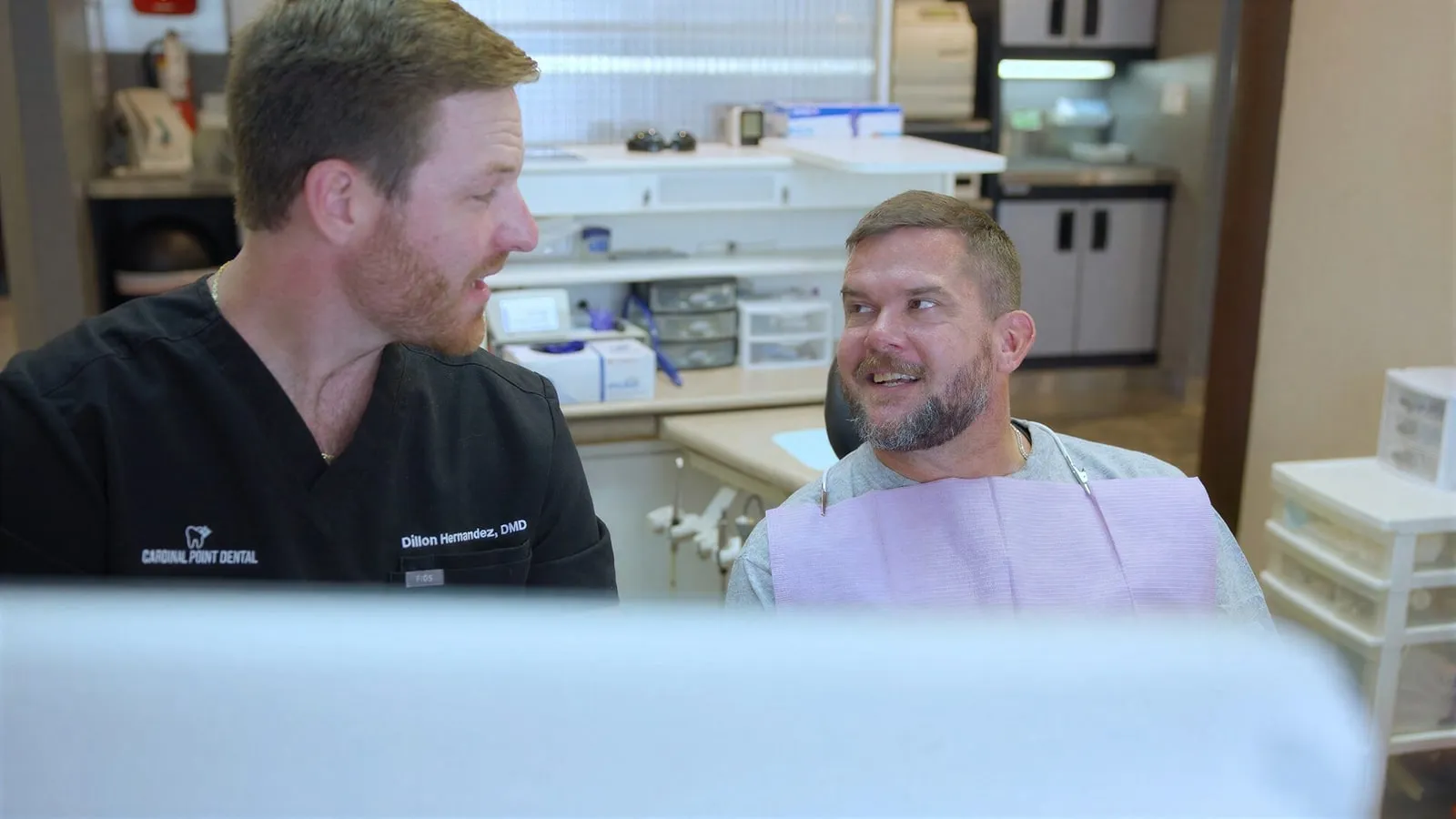
For early cavities, Cardinal Point Dental uses Curodont®, with care led by Dr. Dillon Hernandez. There is no needle, no numbing and no drill.
The treatment works with your own saliva. It is designed to help the fluoride and minerals already in your mouth reach deeper into an early cavity, so the tooth can rebuild the enamel it has lost.
It may be a good fit if an early cavity showed up at a routine exam or on an X-ray. It can also suit patients who feel nervous about dental visits.
When a Filling Is Still the Right Call
Not every cavity qualifies. If decay has moved past the enamel, a filling may still be the best way to protect the tooth.
Tooth-colored fillings bond directly to the tooth and blend in with its natural color. Left untreated, deeper decay can reach the nerve, which is one of the signs of a root canal worth watching for.
Habits That Keep Early Decay From Returning
Reversing an early cavity works best when the habits behind it change too. Good cavity prevention at home includes:
- Brushing twice a day with fluoride toothpaste
- Flossing once a day
- Cutting back on sugary and acidic snacks and drinks
Dental sealants add a protective coating to the grooves of back teeth, where cavities most often start. Keeping up with regular dental checkups is how early cavities get found while they can still be reversed.
You can see every option in our preventive dentistry care, or browse all of our dental services.
Frequently Asked Questions
How is Curodont different from a filling?
Curodont® helps an early cavity rebuild lost enamel, while a filling repairs a tooth after the decay has been removed. Curodont needs no needle, numbing or drill.
A filling restores the shape and function of a tooth once a cavity has gone deeper than the enamel can repair. Your dentist will tell you which one fits your tooth after looking at it closely.
What should I avoid right after a cavity reversal visit?
Avoid rinsing, eating or drinking for 30 minutes after the treatment. Those first 30 minutes are the only special instruction the practice lists for this visit.
After that, go back to your usual brushing and flossing. Keeping your regular dental visits lets your dentist check that the treated spot is staying healthy over time.
Can a cavity heal on its own without a dentist?
A very early white spot may remineralize with help from saliva, fluoride toothpaste and better habits, but a cavity that has formed a hole will not fill back in by itself.
The Cleveland Clinic notes that fluoride can help heal a cavity that is just beginning. Deeper decay usually keeps growing and may eventually need a filling, a crown or a root canal.
How would I know if I have an early cavity?
Most people can’t tell on their own, because early tooth decay usually causes no pain or other symptoms. Some notice a chalky white spot, but many early cavities are easy to miss.
That is why routine exams and X-rays matter so much. At Cardinal Point Dental in Jacksonville, these regular visits are how small areas of decay get found while they are still easy to treat.
Does insurance cover cavity reversal at Cardinal Point Dental?
Coverage depends on your plan and on the treatment your tooth needs, so it varies from patient to patient. The office can help confirm your benefits before any treatment starts.
If you have questions about your plan or whether cavity reversal is covered, call Cardinal Point Dental at (904) 733-1900 and the team will help you check.
Ask About an Early Cavity
If your dentist has mentioned an early cavity, cavity reversal may let you treat it without a drill. The sooner it is found, the more of your natural tooth you keep.
Call Cardinal Point Dental today at (904) 733-1900 or request an appointment online to see our dentist in Jacksonville, FL.


